Network Security for Banks: Why Uptime Isn't Enough
Network security for banks requires more than uptime. Learn how Logically and Extreme Networks improve branch visibility, consistency, and oversight.
Key Takeaways
- Network uptime does not equal network security. Regional banks need visibility into configurations, firmware, policies, and changes across their branches, not just availability metrics.
- Centralized network management improves oversight. A consistent view of supported infrastructure helps IT teams identify differences, investigate issues, and prioritize improvements.
- Network management tools do not replace security controls. Dedicated cybersecurity measures, documented processes, and expert oversight remain essential.
- Extreme Networks and Logically provide complementary capabilities. Extreme Networks supplies wired and wireless networking technology, while Logically contributes cyber-first expertise in design, deployment, management, and optimization.
- Consistency supports audit readiness and growth. Standardized practices, documented changes, and phased modernization help regional banks integrate acquisitions and manage expanding environments with greater confidence.
Network Security for Banks: Why Uptime Isn't Enough
Network security for banks requires more than keeping systems online. Regional banks must maintain consistent network configurations, monitor infrastructure changes, and address security risks across every branch, even when uptime looks healthy.
As financial institutions expand through acquisitions, new locations, and infrastructure modernization, network management becomes increasingly complex. Logically and Extreme Networks help regional banks address these challenges by combining enterprise networking technology with cyber-first expertise, ongoing management, and human-led support.
Why Isn't Network Uptime Enough to Demonstrate Security?
Network uptime measures availability, not whether security controls are consistently configured, maintained, or effective. A branch can report excellent uptime while operating with outdated firmware, inconsistent wireless policies, or configuration settings that differ from established standards.
Consider a hypothetical regional bank with 12 branches. Every location reports acceptable uptime, but a network review identifies:
- Three branches with configurations that differ from approved standards.
- Two locations operating devices with outdated firmware.
- One acquired branch still using inherited wireless policies.
None of these conditions has caused an outage. However, each introduces operational concerns that require evaluation.
For IT leaders, the challenge is understanding what availability metrics cannot reveal. A network that appears healthy may still have weaknesses in configuration governance, change management, or security oversight.
The potential consequences extend beyond downtime. Unaddressed differences can complicate troubleshooting, increase security exposure, and make it harder to produce reliable information during audits.
What Is Centralized Branch Network Management?
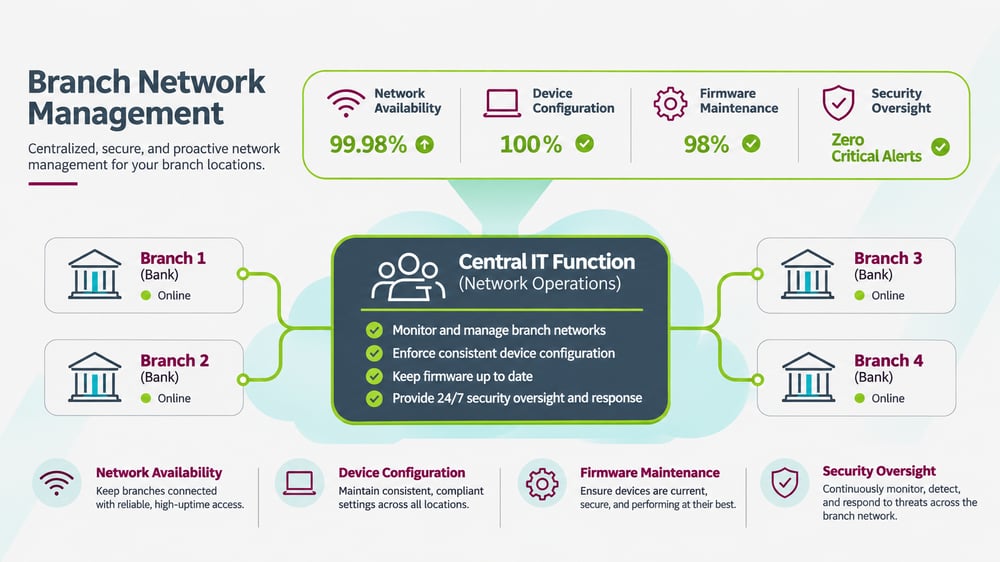
Centralized branch network management is the practice of monitoring, configuring, and overseeing network infrastructure across multiple locations through coordinated tools, policies, and processes. It helps financial institutions establish consistent management practices without treating every branch as an independent environment.
Effective branch network management includes visibility into connected devices, configuration differences, network performance, and infrastructure changes.
For regional banks, this approach provides a clearer foundation for operational decisions. Instead of relying on separate reports or manual investigations at each location, IT teams can use centralized information to determine where attention is needed.
However, centralized visibility does not automatically establish consistent security controls. Organizations still need defined standards, appropriate access restrictions, reliable maintenance processes, and people accountable for reviewing findings.
How Do Logically and Extreme Networks Support Banking Network Security?
Logically and Extreme Networks combine enterprise wired and wireless networking technology with cyber-first services that help regional banks design, deploy, manage, and optimize distributed network environments.
Extreme Networks provides networking infrastructure and cloud-based management capabilities. Its ExtremeCloud IQ network management platform supports capabilities such as device monitoring, configuration workflows, and network analytics across compatible infrastructure.
Logically brings the engineering expertise and operational oversight needed to put those capabilities to work. Rather than treating networking and cybersecurity as unrelated responsibilities, Logically applies a cyber-first approach that considers security throughout network design, deployment, and ongoing management.
The two organizations contribute distinct capabilities:
|
Capability |
Extreme Networks |
Logically |
|
Network infrastructure |
Enterprise wired and wireless technology |
Architecture, deployment, and integration |
|
Network visibility |
Management tools and analytics for supported devices |
Interpretation, investigation, and operational guidance |
|
Configuration management |
Supported policy and configuration capabilities |
Standardization planning and change management |
|
Issue resolution |
Network diagnostic and management functionality |
Human-led troubleshooting and remediation coordination |
|
Long-term optimization |
Networking platform capabilities |
Ongoing management and strategic recommendations |
Extreme Networks provides the technology foundation, while Logically helps translate network information into practical decisions and coordinated action.
The available visibility and management functions depend on device compatibility, licensing, configuration, and the specific services deployed.
How Can Banks Improve Network Security Controls Across Branches?
Regional banks can strengthen network security controls by establishing consistent configuration standards, reviewing infrastructure regularly, and managing changes through documented processes.
A practical approach involves five steps:
- Inventory network infrastructure. Identify switches, wireless access points, firmware versions, and supported management capabilities across locations.
- Establish configuration standards. Define approved settings, wireless policies, access requirements, and maintenance practices.
- Review differences. Compare branch configurations against established standards and assess exceptions.
- Prioritize remediation. Address identified concerns according to security exposure, operational impact, and business requirements.
- Document changes. Maintain records of approved updates, exceptions, and remediation activities.
For banks with lean internal IT teams, consistently performing these activities can be difficult alongside daily support responsibilities.
Logically's managed IT services help organizations evaluate network health, plan improvements, and coordinate ongoing management activities.
How Does Network Management Support Banking Compliance and Audit Readiness?
Centralized network management can support audit readiness by making configuration information, infrastructure changes, and operational documentation easier to review. It does not replace dedicated security controls, formal risk assessments, or compliance programs.
Financial institutions must evaluate technology risks within their broader governance responsibilities. The Federal Financial Institutions Examination Council (FFIEC) guidance addresses technology architecture, infrastructure, operations, governance, and risk management.
FFIEC
Network management information can help teams investigate whether approved configurations are being maintained and whether changes follow established procedures.
Logically adds experienced professionals who can help banks identify issues for review, coordinate updates, and maintain relevant operational documentation.
For organizations needing broader assistance, Logically also offers governance, risk, and compliance services to support risk assessment, control evaluation, and audit preparation.
How Should Regional Banks Manage Networks After an Acquisition?
Banks should integrate acquired branch networks through a phased process that assesses existing infrastructure, identifies configuration differences, and prioritizes changes based on security and operational requirements.
An acquired branch may have different wireless settings, older networking equipment, or policies inherited from its previous organization.
Immediately replacing every component is not always necessary or practical. A more effective approach begins by understanding the current environment and determining which changes are most important.
Extreme Networks' management tools can provide visibility into compatible infrastructure. Logically helps assess differences, establish priorities, and plan changes that account for service continuity.
This approach allows banks to work toward greater consistency while managing the disruption and expense associated with network integration.
What Should Banks Look for in a Network Management Partner?
Regional banks should evaluate network management partners based on technical expertise, security integration, operational accountability, and their ability to support distributed environments.
Important evaluation criteria include:
- Experience designing and managing multi-branch wired and wireless networks.
- Cybersecurity expertise integrated into daily network operations.
- Clear responsibilities for monitoring, maintenance, change management, and escalation.
- Support for existing infrastructure and future modernization.
- Practical reporting and documentation processes.
- A management approach aligned with operational and compliance needs.
Technology matters, but so does accountability.
A provider that only supplies equipment may leave the bank responsible for coordinating configuration changes, troubleshooting, security reviews, and multiple service relationships.
Logically's integrated operating model brings IT management and cybersecurity together under one accountable partner, helping reduce fragmented workflows and simplify coordination.
Why Does a Cyber-First Approach Matter for Long-Term Network Growth?
A cyber-first approach integrates security considerations into network planning and daily operations rather than treating protection as a separate activity.
As regional banks open new branches, adopt additional technologies, and replace aging infrastructure, consistent oversight becomes more important.
Without coordinated management, differences between locations can accumulate. Over time, this may increase the effort required to troubleshoot problems, maintain standards, and investigate security concerns.
Logically helps banks align infrastructure decisions with operational priorities, security requirements, and long-term technology plans. Its human-led expertise complements network management tools by bringing context and judgment to decisions that automated information alone cannot resolve.
How Can Logically Help Your Bank Strengthen Network Management?
Network security for banks depends on more than reliable connectivity. It requires consistent network management, security-conscious decision-making, and clear accountability across every branch.
Extreme Networks delivers enterprise networking technology, while Logically brings the cyber-first expertise to design, deploy, support, and optimize it.
Together, they help regional banks improve visibility, manage operational complexity, and establish more consistent network practices as their environments evolve.
Ready to look beyond uptime?
Connect with Logically to discuss your bank's branch network environment, identify opportunities to improve management consistency, and plan a practical path forward with Logically and Extreme Networks.
Close the Gap with Logically.
With contributions by Cybersecurity expert Kyle Sandy, Director, Cybersecurity, Logically.
Last Updated November 2026
FAQs
Why isn't network uptime enough to demonstrate bank network security?
Network uptime measures availability, not whether security controls are consistently configured, maintained, or effective.
What is centralized branch network management?
Centralized branch network management is the practice of monitoring, configuring, and overseeing network infrastructure across multiple locations through coordinated tools, policies, and processes.
How do Logically and Extreme Networks support banking network security?
Logically and Extreme Networks combine enterprise wired and wireless networking technology with cyber-first services that help regional banks design, deploy, manage, and optimize distributed network environments.
How can regional banks strengthen network security controls?
Regional banks can strengthen network security controls by establishing consistent configuration standards, reviewing infrastructure regularly, and managing changes through documented processes.
How does centralized network management support audit readiness?
Centralized network management can support audit readiness by making configuration information, infrastructure changes, and operational documentation easier to review.
How should banks manage branch networks after an acquisition?
Banks should integrate acquired branch networks through a phased process that assesses existing infrastructure, identifies configuration differences, and prioritizes changes based on security and operational requirements.
What should regional banks look for in a network management partner?
Regional banks should evaluate network management partners based on technical expertise, security integration, operational accountability, and their ability to support distributed environments.