
Shadow AI Is Scaling Faster Than Most Organizations Can Govern It
Shadow AI is creating governance, compliance, and cybersecurity risks as organizations adopt AI faster than IT teams can control it.
Key Takeaways
- Shadow AI is growing faster than most governance frameworks can adapt. Employees across departments are using generative AI tools to summarize data, generate content, analyze information, and accelerate workflows without formal IT or security oversight. This creates visibility gaps that increase cybersecurity, compliance, and operational risk for organizations adopting AI at scale.
- Shadow AI creates operational, compliance, and intellectual property exposure beyond traditional cybersecurity risks. Public AI tools can unintentionally expose customer data, source code, financial records, and regulated information through prompts and uploads. Organizations subject to HIPAA, PCI-DSS, SEC, or privacy regulations face increased audit and governance challenges when AI adoption occurs outside approved environments.
- Blocking AI adoption is not a sustainable business strategy. Organizations gain measurable productivity and operational efficiency from AI, but unmanaged adoption introduces risk. Effective AI governance requires approved AI platforms, acceptable-use policies, centralized visibility, employee education, and coordinated oversight between IT, cybersecurity, compliance, and business leadership.
- AI governance must move at the speed of AI adoption to reduce organizational risk. According to research from NIST, Gartner, Microsoft, and OWASP, enterprises increasingly struggle to maintain visibility and accountability as AI tools proliferate across distributed environments. Organizations that establish centralized governance early are better positioned to scale AI securely and confidently.
Shadow AI Is Scaling Faster Than Most Organizations Can Govern It
AI adoption inside the enterprise is no longer a future initiative. AI is already embedded into day-to-day operations, often without governance, oversight, or security review.
Employees across departments are using generative AI tools to summarize documents, analyze data, generate code, draft communications, and accelerate workflows. In many organizations, AI adoption is moving faster than IT, security, and compliance teams can evaluate or control it.
That disconnect is creating a growing operational and cybersecurity challenge: Shadow AI.
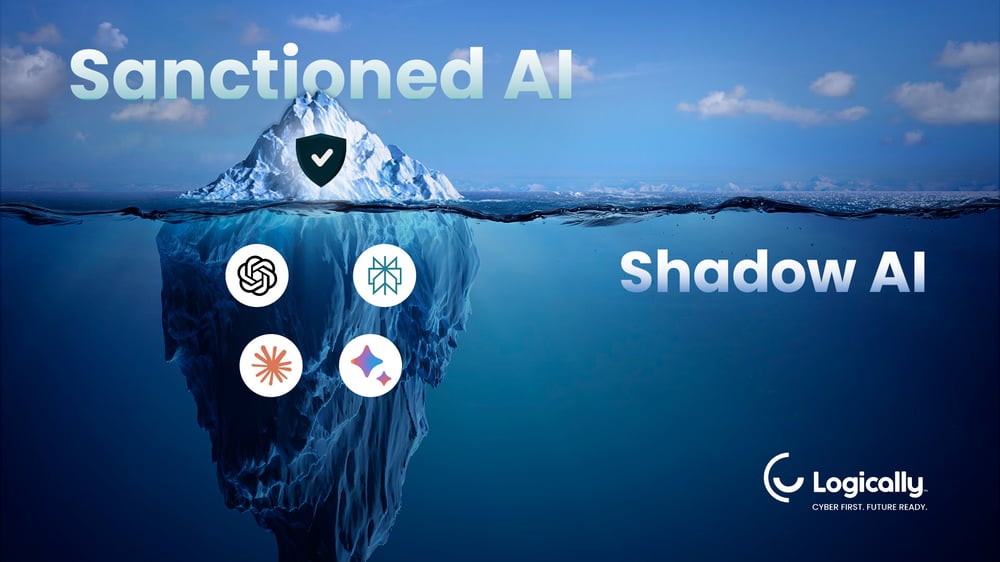
Like Shadow IT before it, Shadow AI refers to the unsanctioned use of AI applications, models, and platforms outside approved organizational controls. The difference is that AI introduces a new category of operational and governance risk.
Sensitive data can be exposed through prompts. Intellectual property can be unintentionally shared. AI-generated outputs may be inaccurate, non-compliant, or impossible to validate and trace.
For CIOs, CISOs, IT leaders, compliance teams, and business executives, Shadow AI is no longer just a technology concern. Shadow AI is a visibility, accountability, and risk management challenge.
Why Is Shadow AI Expanding So Quickly?
The speed of AI adoption is unlike traditional enterprise technology rollouts. Employees can begin using AI tools immediately, often without procurement review, security validation, or IT involvement.
Examples of Shadow AI usage include:
- Marketing teams uploading customer data into public AI platforms
- Developers using generative AI coding assistants outside approved environments
- Finance teams using AI to summarize contracts or generate reports
- Employees using AI tools without understanding data retention or sharing policies
Most Shadow AI adoption is not malicious. Employees are often trying to improve productivity and move faster than traditional governance processes allow.
The challenge is that unmanaged AI adoption creates visibility gaps organizations cannot afford to ignore.
According to research from organizations including NIST, OWASP, Microsoft, and Gartner, enterprises are increasingly struggling to maintain visibility and control as AI adoption accelerates across distributed environments.
Several factors are contributing to the rapid growth of Shadow AI:
- Rapid AI tool proliferation
- Limited AI governance frameworks
- Inconsistent acceptable-use policies
- Lack of centralized visibility
- Pressure to operationalize AI quickly
- Expanding compliance and privacy requirements
As organizations scale AI usage, operational complexity and exposure increase together.
How Does Shadow AI Increase Cybersecurity and Compliance Risk?
Many organizations initially approach Shadow AI as a cybersecurity issue. In reality, Shadow AI affects compliance, operations, legal exposure, business continuity, and organizational accountability.
Data Exposure and Intellectual Property Risk
Public AI platforms may retain prompts, uploads, or generated outputs depending on platform configuration and usage terms.
Employees may unknowingly expose:
- Customer information
- Financial data
- Internal business strategy
- Source code
- Proprietary processes
- Regulated or protected data
Without centralized governance, organizations often have little visibility into what information is being shared externally or where it is being processed.
Compliance and Regulatory Exposure
Shadow AI can create significant compliance challenges, particularly for organizations subject to:
- HIPAA
- PCI-DSS
- SEC requirements
- Data privacy regulations
- Industry-specific governance mandates
When AI usage occurs outside approved environments, maintaining audit readiness and demonstrating control over sensitive data becomes significantly more difficult.
Operational and Decision-Making Risk
Generative AI outputs are not inherently accurate, authoritative, or compliant.
AI-generated recommendations and summaries may contain:
- Inaccurate information
- Fabricated references
- Incomplete conclusions
- Biased outputs
- Unsupported recommendations
Without human oversight and governance, organizations risk operational decisions being influenced by unreliable AI-generated information.
Visibility and Accountability Gaps
One of the most significant risks associated with Shadow AI is fragmented ownership.
When AI adoption occurs independently across departments, organizations often lack:
- Centralized governance
- Clear accountability
- Consistent policy enforcement
- Approved usage standards
- Visibility into adoption and exposure
As environments become more complex, risk grows in the gaps between IT, cybersecurity, compliance, and business operations.
What Makes Shadow AI Different From Shadow IT?
Traditional Shadow IT involved unauthorized software, hardware, or cloud services operating outside IT management.
Shadow AI introduces a different level of complexity because AI systems actively process, generate, and influence business information in real time.
Unlike traditional applications, AI tools can:
- Generate business content
- Interpret sensitive data
- Produce code and automation
- Influence operational decisions
- Create compliance exposure immediately
AI technologies also evolve rapidly. New models, browser extensions, embedded copilots, and integrations appear faster than many organizations can formally assess them.
The result is a constantly moving governance target that requires continuous visibility, coordinated oversight, and operational accountability.
Why Blocking AI Adoption Is the Wrong Strategy
Organizations cannot realistically eliminate AI usage. In many cases, AI delivers measurable value through productivity gains, operational efficiency, and accelerated decision-making.
The goal is not to stop AI adoption. The goal is to operationalize AI securely with governance, visibility, and accountability built into the process from the start.
Organizations that respond reactively often create additional risk by driving employees toward unsanctioned workarounds and unapproved tools.
A more effective approach focuses on:
- Establishing approved AI platforms
- Defining acceptable-use policies
- Creating AI governance standards
- Implementing monitoring and oversight
- Protecting sensitive data
- Educating employees on responsible AI usage
- Aligning AI adoption with cybersecurity and compliance objectives
AI transformation should accelerate innovation without introducing unmanaged operational exposure.
Why Must AI Governance Move Faster?
Traditional governance models are struggling to keep pace with the speed of AI deployment.
Modern AI governance requires organizations to unify:
- IT operations
- Cybersecurity oversight
- Risk management
- Compliance controls
- Data governance
- Employee enablement
This is where many organizations encounter operational gaps. Fragmented ownership between IT, security, compliance, and business teams slows response, limits accountability, and reduces visibility into risk exposure.
Managing AI risk effectively requires a coordinated operating model where governance is integrated into day-to-day operations, not treated as a separate initiative.
At Logically, we believe AI adoption should accelerate innovation without increasing unmanaged risk. Secure AI transformation starts with visibility, governance, and expert guidance aligned to how organizations actually operate.
The Organizations That Govern AI Early Will Scale It More Safely
AI adoption will continue accelerating across every industry. The organizations that succeed will not necessarily be the fastest adopters. They will be the organizations that implement AI responsibly, with operational accountability and governance built in from the start.
Shadow AI is ultimately a visibility and governance challenge. Organizations that establish centralized oversight early will be better positioned to:
- Reduce operational risk
- Protect sensitive data
- Maintain compliance
- Support productivity
- Scale AI initiatives confidently
AI is rapidly becoming embedded into everyday business operations. Governance can no longer be treated as an afterthought.
Close the Gap with Logically
Concerned about unmanaged AI usage across your organization?
Close the gap between AI adoption and governance with a Shadow AI Assessment from Logically.
Our experts help organizations identify visibility gaps, evaluate governance exposure, strengthen accountability, and build a secure foundation for scalable AI adoption.
Request an assessment today.
Logically cybersecurity expert, Zack Finstad speaking at LogicON 2025
Last updated May 2026
FAQ
What is Shadow AI?
Shadow AI is the unsanctioned use of AI applications, generative AI tools, or AI platforms outside approved organizational governance and security controls. Shadow AI often occurs when employees adopt AI tools independently to improve productivity, creating visibility, compliance, and cybersecurity risks for the organization.
Why is Shadow AI a cybersecurity risk?
Shadow AI creates cybersecurity risk because employees may unknowingly expose sensitive information through AI prompts, uploads, or integrations. Public AI platforms can process customer data, source code, financial records, and proprietary business information outside approved security controls, increasing the risk of data exposure and compliance violations.
How is Shadow AI different from Shadow IT?
Shadow AI differs from Shadow IT because AI tools actively generate, process, and influence business information in real time. Unlike traditional unauthorized software, AI platforms can create content, analyze sensitive data, generate code, and impact operational decisions immediately, making governance and accountability significantly more complex.
Can organizations realistically stop employees from using AI tools?
Organizations cannot realistically eliminate AI usage because AI tools deliver measurable productivity and operational benefits. The better approach is implementing secure AI governance through approved platforms, acceptable-use policies, monitoring, employee education, and centralized oversight that aligns AI adoption with cybersecurity and compliance objectives.
What are the biggest risks associated with unmanaged AI adoption?
The biggest risks associated with unmanaged AI adoption include data exposure, intellectual property loss, compliance violations, inaccurate AI-generated outputs, fragmented accountability, and lack of visibility into how employees use AI tools. These risks increase as organizations scale AI adoption across distributed environments.
How can organizations govern AI adoption more effectively
Organizations can govern AI adoption more effectively by establishing approved AI platforms, defining governance policies, implementing centralized monitoring, aligning IT and cybersecurity oversight, protecting sensitive data, and educating employees on responsible AI usage. Effective AI governance integrates accountability and visibility directly into operational workflows.