
Deepfake Cybersecurity: How Mid-Market Businesses Can Defend Against AI-Powered Impersonation Attacks
Deepfake cybersecurity helps businesses prevent AI-powered impersonation attacks through governance, verification controls, and secure AI adoption.
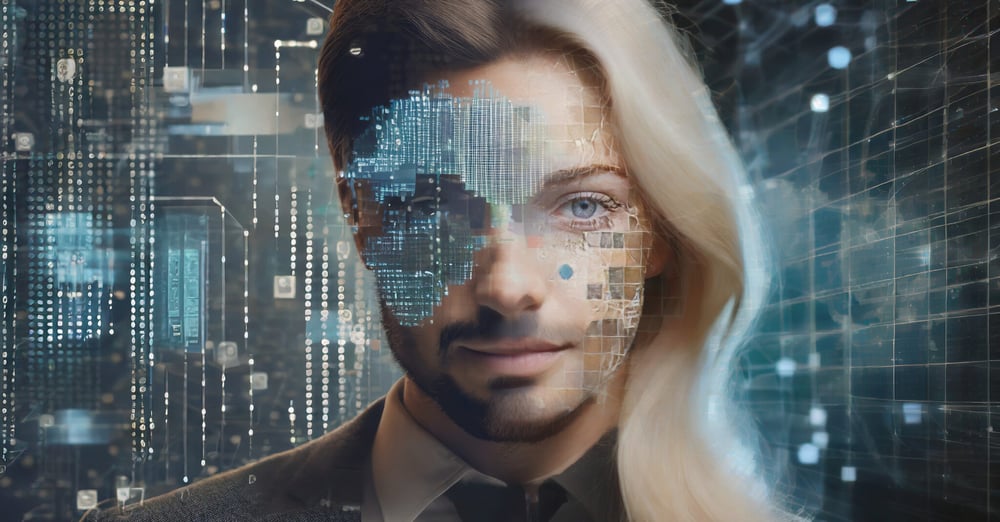
Key Takeaways
- Deepfake cybersecurity helps organizations prevent AI-powered impersonation attacks by combining AI governance, identity verification, operational controls, and employee training. Mid-market businesses are increasingly targeted because attackers can use publicly available data to create convincing voice clones, synthetic video, and executive impersonations at scale.
- AI-generated impersonation attacks target trust rather than systems alone. Deepfake attacks commonly exploit executive approvals, vendor payment workflows, password resets, and remote hiring processes to bypass traditional cybersecurity defenses and manipulate employees into taking high-risk actions.
- Deepfake cybersecurity requires more than traditional security tools because firewalls, endpoint protection, and legacy monitoring systems cannot verify whether a voice, video, or executive request is authentic. Organizations need governed AI adoption, identity governance, and operational oversight to reduce risk effectively.
- Shadow AI increases deepfake cybersecurity risk because employees often use public AI platforms without organizational governance or visibility. Organizations need centralized oversight, approved AI platforms, and secure AI governance to accelerate innovation without increasing exposure.
- Organizations that implement secondary verification procedures, AI governance controls, and secure operational workflows improve cyber resilience while reducing fraud, compliance exposure, reputational damage, and operational disruption. Businesses that govern AI securely from the start are better positioned for long-term resilience and scalable AI adoption.
Deepfake Cybersecurity Is Becoming a Business Priority
Deepfake cybersecurity is becoming a critical priority for CIOs, CISOs, IT Directors, Security Operations Managers, and Compliance Officers across the mid-market.
AI-generated voice cloning, executive impersonation, synthetic identities, and manipulated video attacks are evolving rapidly. These threats are no longer experimental or theoretical. They are active cybersecurity risks affecting how organizations verify identity, approve transactions, govern AI usage, and protect sensitive data.
For mid-market organizations, the challenge is especially urgent. Many businesses are adopting AI tools faster than governance, operational controls, and security oversight can evolve. At the same time, attackers are using the same AI technologies to scale phishing campaigns, automate fraud, and exploit human trust.
Deepfake cybersecurity helps organizations reduce that risk through:
- AI governance
- Identity verification
- Secure operational workflows
- Employee awareness training
- Controlled AI adoption strategies
Organizations that fail to address deepfake cybersecurity risk may face:
- Financial fraud
- Data leakage
- Compliance exposure
- Operational disruption
- Reputational damage
Logically helps organizations close the gap between IT operations, cybersecurity, and AI governance through unified operational oversight and cyber-first managed services.
What Is Deepfake Cybersecurity?
Deepfake cybersecurity refers to the technologies, governance frameworks, policies, and operational controls used to detect, prevent, and respond to AI-generated impersonation attacks.
Deepfake attacks use artificial intelligence to imitate:
- Human voices
- Executive communication styles
- Facial expressions
- Video appearances
- Employee identities
- Writing patterns
- Behavioral interactions
Unlike traditional malware attacks, deepfake attacks target operational trust rather than systems alone.
Attackers use AI-generated impersonation to manipulate employees into:
- Approving payments
- Sharing credentials
- Revealing sensitive information
- Bypassing security controls
- Granting unauthorized access
Deepfake cybersecurity focuses on reducing those risks through:
- AI governance
- Verification protocols
- Identity management
- Operational oversight
- Secure AI adoption
Why Does Deepfake Cybersecurity Matter?
Deepfake cybersecurity matters because AI-generated impersonation attacks are becoming more scalable, more convincing, and easier to launch.
Public AI tools can now generate realistic synthetic media with limited technical expertise. What once required advanced engineering resources can now be created using low-cost AI platforms available to nearly anyone.
This creates significant risk for organizations already managing:
- Expanding attack surfaces
- Hybrid work environments
- Cloud complexity
- AI adoption
- Compliance requirements
- Security staffing shortages
Organizations increasingly face “risk convergence,” where cybersecurity threats, operational complexity, workforce pressures, and compliance requirements compound one another rather than exist independently.
Deepfake attacks accelerate that convergence because they target both technology systems and human decision-making simultaneously.
How Do Deepfake Cybersecurity Threats Work?
Most deepfake cybersecurity attacks follow a similar operational pattern.
1. Data Collection
Attackers collect publicly available information, including:
- Executive interviews
- Social media videos
- Earnings calls
- Voicemail recordings
- Employee profile information
- Corporate communication styles
2. AI Model Generation
Attackers use AI platforms to generate:
- Cloned executive voices
- Synthetic video
- AI-generated phishing emails
- Realistic impersonation messages
3. Social Engineering Execution
Attackers use urgency, authority, and familiarity to manipulate employees into taking action.
Common examples include:
- Wire transfer requests
- Password reset approvals
- MFA bypass attempts
- Vendor payment fraud
- Fake executive approvals
- HR onboarding manipulation
4. Operational Exploitation
Once trust is established, attackers exploit workflow gaps, weak verification processes, or human error to gain access or move money.
Deepfake cybersecurity exists to interrupt this process before operational damage occurs.
What Are the Biggest Deepfake Cybersecurity Risks for Businesses?
Financial Fraud
AI-generated executive impersonation is increasingly used to authorize fraudulent transactions and payment requests.
Voice cloning attacks are especially dangerous because employees often trust familiar executive voices without requiring secondary verification.
Business Email Compromise (BEC)
Deepfake-enabled business email compromise combines AI-generated phishing emails with synthetic voice or video impersonation.
These attacks are more convincing than traditional phishing campaigns because they imitate real communication patterns, workflows, and executive behavior.
Synthetic Identity Fraud
Organizations hiring remotely face increasing risks from AI-generated candidates using manipulated video, synthetic identities, or fraudulent credentials.
These attacks can lead to:
- Unauthorized system access
- Intellectual property theft
- Insider risk exposure
- Compliance issues
Data Leakage Through Shadow AI
Employees frequently use public AI platforms without organizational oversight.
This creates shadow AI environments where sensitive business information may be uploaded into unmanaged systems.
According to the LogicAI data sheet, unmanaged AI usage can create:
- Data leakage risks
- Intellectual property exposure
- Compliance challenges
- AI vendor sprawl
- Limited visibility into AI usage
Brand and Reputation Damage
Deepfake executive statements, manipulated customer communications, and synthetic media incidents can damage customer trust rapidly, even if the content is later proven false.
Who Needs Deepfake Cybersecurity Protection?
Deepfake cybersecurity is especially important for:
- Mid-market businesses
- Financial services organizations
- Healthcare organizations
- Professional services firms
- Organizations with distributed workforces
- Businesses handling sensitive customer data
- Companies rapidly adopting AI technologies
The leadership roles most commonly responsible for deepfake cybersecurity readiness include:
- CIOs
- CISOs
- IT Directors
- Compliance Officers
- Security Operations leaders
- Executive leadership teams
Organizations with limited AI governance processes are often the most vulnerable to AI-powered impersonation attacks.
How Can Businesses Reduce Deepfake Cybersecurity Risk?
Establish Secondary Verification Procedures
Organizations should require secondary verification for:
- Financial approvals
- Sensitive access requests
- Password resets
- Vendor payment changes
- Executive authorization requests
Voice communication alone should never serve as sufficient verification.
Govern AI Usage Internally
Businesses need centralized visibility into:
- Which AI tools employees use
- What data employees upload
- Which models are approved
- Who has access to AI systems
- How AI-generated outputs are governed
Improve Identity Governance
Organizations should strengthen:
- Multi-factor authentication (MFA)
- Role-based access controls
- Approval workflows
- Access auditing
- Escalation procedures
Update Security Awareness Training
Traditional phishing awareness training is no longer sufficient.
Employees should receive training specifically focused on:
- Voice cloning attacks
- Executive impersonation
- AI-generated phishing
- Synthetic identities
- Social engineering escalation tactics
Build Security Into AI Adoption
Organizations should not avoid AI adoption entirely. Instead, businesses should implement governed AI adoption strategies from the beginning.
Organizations need AI adoption strategies that accelerate innovation without introducing unnecessary operational or cybersecurity risk.
Why Traditional Security Tools Are Not Enough
Traditional cybersecurity controls were designed primarily to stop technical compromise.
Deepfake attacks target operational trust.
A firewall cannot determine whether a CFO’s voice is authentic.
Endpoint protection cannot verify whether a video meeting participant is legitimate.
Traditional detection tools also struggle because AI-generated impersonation attacks often appear operationally valid.
This is why modern deepfake cybersecurity requires:
- AI governance
- Human verification processes
- Operational oversight
- Secure AI adoption controls
- Unified IT and cybersecurity visibility
Logically identifies fragmented IT and cybersecurity operations as a major source of operational risk and security blind spots. Deepfake attacks exploit those gaps directly.
Deepfake Cybersecurity Requires AI Governance
The long-term solution to deepfake cybersecurity is not avoiding AI.
The long-term solution is governed AI adoption.
Organizations that successfully reduce AI-related risk typically:
- Maintain visibility into AI usage
- Standardize approved AI platforms
- Implement governance controls
- Reduce shadow AI exposure
- Build verification into operational workflows
- Align cybersecurity and operational oversight
Deepfake cybersecurity is ultimately a governance challenge as much as a technical challenge.
What Is LogicAI?
LogicAI is an AI governance solution designed to help organizations securely enable AI adoption while reducing shadow AI risk and improving visibility into AI usage.
LogicAI provides:
- Governed AI access
- Centralized visibility
- AI usage oversight
- Audit-ready governance
- Private AI environments
- Secure AI enablement
The platform helps organizations standardize AI adoption without sacrificing security, compliance, or operational control.
Organizations using unmanaged public AI platforms often face:
- Data leakage risks
- AI sprawl
- Compliance exposure
- Limited oversight
- Loss of institutional knowledge
LogicAI helps organizations reduce those risks while enabling secure AI adoption at scale.
Deepfake Cybersecurity Is Becoming a Business Requirement
Deepfake cybersecurity is no longer optional for organizations adopting AI technologies.
As AI-generated impersonation attacks continue evolving, businesses need stronger governance, clearer operational controls, and better visibility into how AI is used across the organization.
Organizations that fail to address these risks may face:
- Financial fraud
- Compliance exposure
- Operational disruption
- Data leakage
- Reputational damage
The organizations best positioned for long-term resilience will be the ones that govern AI securely from the beginning.
Logically’s LogicAI solution helps organizations reduce shadow AI risk, improve governance, and adopt AI securely through a controlled, auditable AI environment built for modern operational and cybersecurity demands.
Request a demo to learn how LogicAI helps mid-market organizations strengthen deepfake cybersecurity readiness and govern AI securely at scale.
Logically cybersecurity expert, Buddy Pitt speaking at LogicON 2025
FAQ
What is deepfake cybersecurity?
Deepfake cybersecurity refers to the technologies, operational controls, and governance strategies used to prevent AI-generated impersonation attacks involving synthetic voice, manipulated video, fake identities, and AI-generated communications. Deepfake cybersecurity helps organizations reduce fraud, strengthen identity verification, and improve operational resilience against AI-powered social engineering attacks.
Why are deepfake attacks dangerous?
Deepfake attacks are dangerous because they target human trust rather than technical vulnerabilities alone. Attackers use AI-generated impersonation to manipulate employees into approving payments, sharing credentials, bypassing security controls, or exposing sensitive business data. These attacks are increasingly convincing because they imitate real executives, employees, and communication styles.
Which industries are most vulnerable to deepfake attacks?
Financial services, healthcare, professional services, and mid-market organizations with distributed workforces are among the industries most vulnerable to deepfake attacks. Organizations handling sensitive customer information, remote hiring processes, financial transactions, or rapid AI adoption face elevated exposure to AI-powered impersonation and fraud risks.
How can businesses prevent deepfake attacks?
Businesses can reduce deepfake cybersecurity risk by implementing AI governance, secondary verification procedures, employee awareness training, identity governance controls, and secure AI adoption policies. Organizations should also maintain centralized oversight of approved AI tools, strengthen MFA processes, and build verification procedures into operational workflows.
What is shadow AI?
Shadow AI refers to employees using public AI tools without organizational approval, governance, or cybersecurity oversight. Shadow AI creates operational and compliance risks because sensitive company information may be uploaded into unmanaged AI systems without visibility, audit controls, or data protection safeguards.
How does LogicAI help reduce AI risk?
LogicAI helps organizations reduce AI-related risk through centralized AI oversight, governed AI access, audit-ready governance controls, and secure AI enablement. The platform allows organizations to standardize AI adoption while improving visibility, reducing shadow AI exposure, and maintaining stronger operational and cybersecurity control.