Running on Empty: How to Prevent IT and Cybersecurity Burnout
Discover how to reduce IT burnout and cybersecurity fatigue through smarter processes, responsible AI, and managed IT services.
Key Takeaways
- IT burnout is an operational risk. Excessive workloads, fragmented processes, unclear responsibilities, and persistent interruptions can undermine service quality, employee retention, and security performance.
- Workforce resilience begins with better work design. Organizations should remove unnecessary friction rather than expect employees to continuously absorb increasing workloads.
- AI and automation must reduce effort, not just increase output. Effective automation eliminates repetitive tasks while maintaining human judgment and appropriate oversight.
- Operational metrics should measure outcomes. Ticket volume, dashboard activity, and completed tasks provide limited insight without service quality, accuracy, and employee capacity measures.
- Managed IT services can reduce internal pressure. A coordinated IT and cybersecurity partner can take responsibility for ongoing monitoring, maintenance, and security operations, freeing internal teams for business priorities.
- Leadership remains accountable. Sustainable performance requires clear priorities, realistic expectations, defined ownership, and a culture that values employee well-being.
Running on Empty: How to Prevent IT and Cybersecurity Burnout
IT burnout occurs when sustained workloads, operational inefficiencies, and constant demands exceed employees' capacity to perform effectively. For IT and cybersecurity teams, the consequences extend beyond employee well-being to service quality, security readiness, and business continuity.
As artificial intelligence (AI) accelerates operations and technology environments grow more complex, organizations must rethink how work gets done. Building workforce resilience means reducing unnecessary strain, improving processes, and helping employees sustain high performance without sacrificing their health.
What Is Workforce Resilience in IT and Cybersecurity?
Workforce resilience in IT and cybersecurity is an organization's ability to sustain reliable technology operations and security performance without continuously overloading its employees. It depends on manageable workloads, clear responsibilities, effective processes, and the resources teams need to succeed.
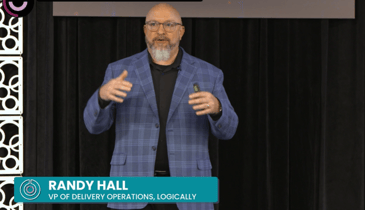
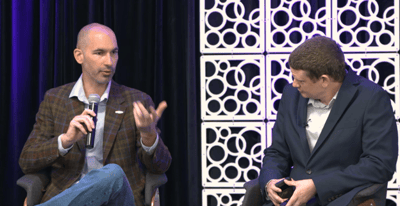
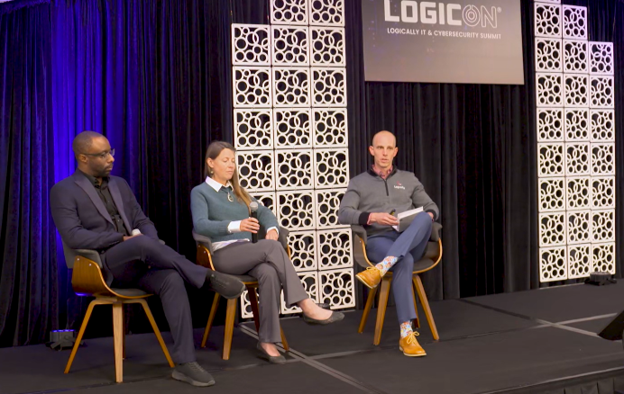
At a recent Logically leadership discussion, CEO Joshua Skeens emphasized an important distinction:
“Resilience is not asking people to absorb more. It is designing the work so great people can perform at a high level for the long term.”
This perspective reframes workforce resilience as an operational responsibility. Employees should not have to compensate indefinitely for inefficient systems, unclear processes, or insufficient resources.
Why Is IT Burnout a Growing Business Risk?
IT burnout threatens operational consistency, employee retention, and an organization's ability to manage technology and cybersecurity risks effectively.
The pressure on cybersecurity professionals continues to intensify. According to ISACA's 2026 State of Cybersecurity research:
- 58% of organizations report understaffed cybersecurity teams.
- 68% of cybersecurity professionals say their roles have become more stressful over the past five years.
- 52% identify unrealistic expectations or excessive workloads as stressors.
- 52% cite high work stress as the leading reason employees leave cybersecurity roles.
These findings demonstrate why organizations cannot treat cybersecurity burnout as an isolated human resources issue.
Fatigue can weaken decision-making, delay responses to technology problems, and undermine customer confidence. For organizations with lean IT departments, the loss of even one experienced employee can disrupt essential operations.
What Are the Early Warning Signs of IT Team Burnout?
IT team burnout often becomes visible through changes in everyday work habits before performance deteriorates significantly.
Donny Pryor, Regional Director of Managed Services at Logically, identified employees consistently skipping lunches or breaks as an important early warning sign. When engineers feel they cannot step away from their responsibilities, sustained pressure may already be affecting their well-being.
Other warning signs include rising backlogs, repeated escalations, excessive after-hours work, declining documentation quality, and increasing difficulty prioritizing tasks.
Leaders should investigate these patterns rather than interpreting them as evidence that employees need to work harder.
What Operational Problems Contribute to IT Burnout?
IT burnout frequently develops when inefficient processes force employees to spend valuable time navigating confusion instead of solving problems.
Three operational challenges deserve particular attention.
1. Unclear Responsibilities and Duplicative Work
When responsibilities overlap or ownership is undefined, employees may repeat work, overlook tasks, or spend unnecessary time resolving disagreements between departments.
Allison Luker, Logically's Director of Revenue Operations at the time of the discussion, emphasized the importance of clearly defined responsibilities and cross-functional collaboration.
Establishing ownership for workflows, decisions, and outcomes reduces unnecessary handoffs and helps teams work more effectively.
2. Inconsistent Documentation
Missing, outdated, or scattered documentation increases the time engineers spend troubleshooting.
Standardized documentation gives IT professionals reliable access to procedures, configurations, and critical system information. This reduces uncertainty and enables more consistent service delivery.
3. Activity Without Meaningful Outcomes
High ticket counts, numerous meetings, and extensive reporting can create the appearance of productivity without improving results.
Organizations should measure whether work achieves its intended purpose, rather than simply tracking how much activity takes place.
For example, resolving 100 tickets means little if the same problems continually return. First-contact resolution, recurring incidents, and customer satisfaction provide additional context about service effectiveness.
How Can AI and Automation Reduce IT Burnout?
AI and automation can reduce IT burnout by eliminating repetitive tasks, improving information access, and giving employees more time for complex work that requires human judgment.
However, faster processing does not automatically create sustainable workloads.
AI systems can generate information and initiate actions continuously, but employees have finite capacity to review, interpret, and respond. Without appropriate controls, automation may actually increase pressure.
"AI systems can generate information and initiate actions continuously,
but employees have finite capacity to review, interpret, and respond.
Without appropriate controls, automation may actually increase pressure."
- Joshua Skeens, CEO, Logically
Consider automated reporting. A process that previously required two hours of manual preparation might take minutes when automated, allowing an engineer to focus on higher-value responsibilities.
That benefit disappears if employees must spend the same amount of time correcting errors, validating unreliable outputs, or responding to additional work generated downstream.
The most effective automation improves the quality and sustainability of work, not simply the volume of activity.
How Should Organizations Evaluate Automation?
Before implementing AI or automation, IT leaders should:
- Identify operational friction. Determine which repetitive activities consume the most time.
- Improve the underlying process. Eliminate unnecessary steps and clarify ownership before automating.
- Define measurable outcomes. Establish how the solution should improve accuracy, efficiency, or service quality.
- Maintain human oversight. Ensure qualified employees validate critical outputs and direct consequential decisions.
- Measure the downstream impact. Confirm that automation reduces total effort rather than transferring work to another team.
These principles are especially important in security operations, where excessive alerts and false positives can distract analysts from genuine threats.
How Can Managed IT Services Improve Workforce Resilience?
Managed IT services can improve workforce resilience by transferring routine monitoring, maintenance, support, and selected security responsibilities to a dedicated external team.
This approach can be particularly valuable for mid-market organizations with limited internal IT resources, multiple locations, or increasingly complex technology environments.
A managed service provider (MSP) can help organizations maintain essential operations without requiring internal employees to handle every issue, including after-hours demands.
|
Operational challenge |
Managed services support |
Potential workforce benefit |
|
After-hours interruptions |
Continuous monitoring and agreed support coverage |
Fewer disruptions to personal time |
|
Routine system maintenance |
Patch management and proactive monitoring |
More capacity for strategic initiatives |
|
Security alert overload |
Managed detection and response |
Less repetitive alert investigation |
|
Limited specialized expertise |
Access to experienced technical professionals |
Reduced pressure on internal generalists |
|
Fragmented IT and security operations |
Coordinated workflows and accountability |
Fewer handoffs and clearer ownership |
Outsourcing is not a substitute for leadership accountability. Organizations must still establish priorities, define responsibilities, and ensure that service arrangements meet operational and security requirements.
How Does Logically Help Reduce IT and Cybersecurity Workloads?
Logically helps organizations address IT burnout by unifying IT operations and cybersecurity through a single, accountable operating model.
Our approach combines AI-assisted monitoring with human-led analysis and response, helping teams identify issues, coordinate remediation, and reduce unnecessary operational friction.
Through Logically's managed IT services, organizations can access proactive monitoring, dedicated support, patch management, and managed operational capabilities.
This integrated approach helps internal IT professionals concentrate on business initiatives while maintaining visibility into technology performance and cybersecurity risk.
For organizations operating across multiple locations, coordinated IT and security management can also improve consistency and reduce the burden of managing disconnected vendors.
How Can Leaders Build a More Resilient IT Workforce?
Preventing IT burnout requires leadership to address operational conditions, not simply encourage employees to become more resilient.
Start with five practical priorities:
- Evaluate workload sustainability. Review after-hours demands, staffing levels, unresolved tickets, and employee feedback.
- Remove process friction. Standardize documentation, eliminate duplicative work, and clarify responsibilities.
- Prioritize meaningful metrics. Measure service quality, response effectiveness, recurring issues, and available employee capacity.
- Use automation responsibly. Reduce repetitive work while maintaining appropriate human oversight.
- Align support with business needs. Determine where internal resources require additional coverage or specialized expertise.
Progress should be evaluated through both operational results and employee experience.
Workforce resilience is not achieved by expecting employees to do more with less. It comes from creating an operating environment where technology, processes, and people work together effectively.
Build Workforce Resilience Without Compromising Security
Reducing IT burnout requires more than addressing individual workloads. Organizations must eliminate operational friction, adopt responsible automation, and ensure that IT and cybersecurity responsibilities are managed effectively.
Logically helps businesses close the gap between IT operations and cybersecurity with proactive support, coordinated expertise, and a cyber-first approach designed around operational resilience.
Ready to reduce pressure on your internal IT team?
Connect with Logically to explore how managed IT and cybersecurity services can strengthen operations, reduce unnecessary workload, and give your people more capacity to focus on what matters most.

Source: Workforce Resilience: Protecting the People who Protect the Business LogicON session by Joshua Skeens, CEO, Logically, Alison Leuker, Director of Revenue Operations, Logically, Donny Pryor, Regional Director, Managed Services, Logically
Last updated November 2026
FAQs
The following answers are reproduced verbatim from the main blog body, without editing or paraphrasing.
What is workforce resilience in IT and cybersecurity?
Workforce resilience in IT and cybersecurity is an organization's ability to sustain reliable technology operations and security performance without continuously overloading its employees.
Why is IT burnout a business risk?
IT burnout threatens operational consistency, employee retention, and an organization's ability to manage technology and cybersecurity risks effectively.
What causes IT burnout?
IT burnout frequently develops when inefficient processes force employees to spend valuable time navigating confusion instead of solving problems.
How can AI and automation reduce IT burnout?
AI and automation can reduce IT burnout by eliminating repetitive tasks, improving information access, and giving employees more time for complex work that requires human judgment.
How can managed IT services improve workforce resilience?
Managed IT services can improve workforce resilience by transferring routine monitoring, maintenance, support, and selected security responsibilities to a dedicated external team.
How does Logically help organizations address IT burnout?
Logically helps organizations address IT burnout by unifying IT operations and cybersecurity through a single, accountable operating model.