AI Adoption Strategy: Turning AI Into Business Value
Build an AI adoption strategy that combines human expertise, workforce readiness, and smarter workflows to turn AI investments into measurable business value.
Key Takeaways
- AI adoption requires more than technology. Organizations must prepare employees for changing responsibilities, new workflows, and opportunities to create greater business value.
- Employee resistance may reflect concerns about professional relevance. When people associate their value with the tasks they perform, automation can feel threatening.
- Logically's Work to Worth framework changes the conversation. Rather than defining employees by their responsibilities, the approach emphasizes the outcomes they create for customers and the business.
- Workforce readiness depends on leadership. Discovering value, reframing responsibilities, and redesigning workflows help organizations align AI capabilities with business goals.
- Human discernment remains essential. AI can rapidly produce information and recommendations, but experience, relationships, and judgment help determine which actions make sense.
- Redesigning work can create measurable improvements. In one internal example, Logically increased customer renewal notification lead time from 30 to 90 days through process changes, resource realignment, and limited automation.
- Successful AI transformation combines innovation with accountability. AI-assisted capabilities should complement human oversight, governance, and responsible decision-making.
AI Adoption Strategy: How Human Expertise Turns AI Into Business Value
An effective AI adoption strategy requires more than deploying artificial intelligence tools. Organizations must prepare their employees for changing responsibilities, redesign workflows around business outcomes, and help people understand the unique value they contribute.
For business and technology leaders, the challenge is no longer simply getting employees to use AI. It is creating an environment where people and technology work together to produce measurable results.
At Logically, we believe AI should amplify human expertise, not diminish it. That principle is central to building a workforce capable of realizing AI's full potential.
Why Are Businesses Struggling to Realize Value From AI?
Many organizations have adopted AI without fundamentally changing how work gets done.
According to McKinsey's 2026 State of AI research, 80% of surveyed respondents reported improved individual productivity from AI, yet only 37% of organizations attributed any positive enterprise-level earnings impact to AI.
This disconnect points to a critical distinction: AI adoption is not the same as AI business transformation.
Training employees to use AI assistants, write prompts, and automate tasks improves technical proficiency. But those skills alone do not explain how employees' roles should evolve or where their expertise delivers the greatest business value.
That is where AI workforce readiness becomes essential.
What Is AI Workforce Readiness?
AI workforce readiness is an organization's ability to prepare employees to work effectively with artificial intelligence through new skills, redesigned responsibilities, and a clear understanding of how their contributions create business value.
It also requires addressing a question many employees may hesitate to ask:
If AI can perform the work I've spent my career learning to do, what happens to my value?
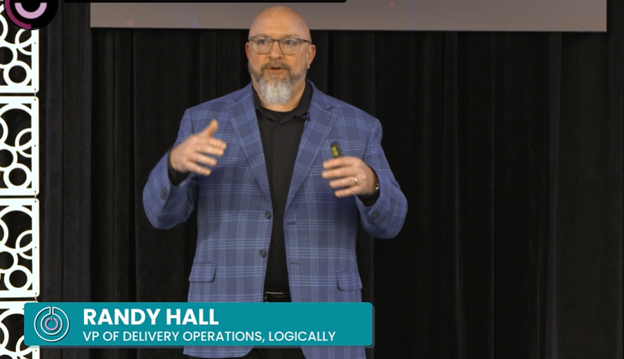
Randy Hall, Vice President of Delivery Operations at Logically, encountered this challenge firsthand.
Despite widespread AI certification and adoption throughout Logically, Hall noticed that employees remained exceptionally busy. He asked his department a seemingly simple question: If everyone received a capable personal assistant, what responsibilities would they delegate?
The response surprised him.
Employees said they had nothing to hand off.
Hall recognized that the resistance might not reflect a lack of suitable tasks. Employees could perceive delegating responsibilities as diminishing their own professional value.
The experience exposed a fundamental obstacle to human-AI collaboration: people often define their worth by what they do rather than what they accomplish.
How Can Leaders Shift From Tasks to Business Value?
An effective AI adoption strategy begins by helping employees distinguish their responsibilities from the outcomes those responsibilities create.
Consider the difference:
Task-Based Thinking |
Value-Based Thinking |
|
I schedule customer calls. |
I help customers connect with the right experts quickly and easily. |
|
I manage projects. |
I reduce uncertainty and help customers move forward confidently. |
|
I create quotes. |
I help customers make informed purchasing decisions through accurate, timely options. |
The work itself has not changed. What changes is how employees recognize its purpose.
Hall developed three questions to help employees articulate their contribution:
- Who benefits from my work? Identify the customer, colleague, or stakeholder receiving value.
- What changes because of my work? Define the improvement, decision, or outcome.
- Why does that outcome matter? Connect the contribution to customer experience or business performance.
Once employees understand their value, AI becomes a way to increase their impact rather than a perceived replacement for their responsibilities.
How Does Logically's Work to Worth Framework Support AI Transformation?
Logically developed its Work to Worth program to help employees recognize, communicate, and expand the value they create.
The complete program includes seven phases. Three foundational elements illustrate its approach to AI business transformation.
1. Discover Where Employees Create Value
Employees begin by writing value statements that describe their contributions.
Leaders evaluate whether those statements identify a meaningful outcome, a specific audience, and a clear explanation of the benefit.
This establishes a baseline for understanding how employees currently view their work.
2. Reframe Responsibilities Around Outcomes
Managers coach employees to move beyond task descriptions and articulate the business impact of their roles.
The process emphasizes learning rather than performance evaluation, creating space for employees to reconsider how their expertise contributes to organizational success.
3. Redesign Workflows to Increase Value
Once value is clearly defined, organizations can determine which activities AI should automate, support, or enhance.
This includes reviewing processes, reallocating resources, and prioritizing work that directly benefits customers.
The goal of workflow redesign is not simply to complete tasks faster, but to improve the outcomes those tasks produce.
How Can Organizations Measure AI Business Value?
Measuring AI business value requires evaluating outcomes alongside operational efficiency.
Logically's Work to Worth framework assesses employee value statements across three dimensions:
- Focus: Does the statement describe an outcome rather than merely a task?
- Audience: Does it identify who receives the benefit?
- Clarity: Can others easily understand the value being created?
These measures help leaders coach employees toward outcome-oriented thinking. The ultimate goal, however, is to improve how work is organized and performed.
A Real-World Example: Improving Customer Renewal Processes
At Logically, one operations team previously delivered customer renewal notifications approximately 30 days before expiration.
By examining the process through a customer-value lens, team leader Anthony Menino identified opportunities to reorganize responsibilities, improve workflows, and introduce limited automation.
|
Before redesign |
After redesign |
Logically internal operational example, as reported by Randy Hall. The improvement occurred within two months and was achieved after reallocating one team member.
The change gave customers three times as much advance notice to evaluate their options and make purchasing decisions.
Importantly, the improvement was not attributable to AI alone. It resulted from a broader operational redesign that aligned resources and processes with customer needs.
This illustrates why AI business transformation must be measured by meaningful customer outcomes, not automation volume alone.
Why Is Human Discernment Essential to AI Adoption?
Human discernment is the ability to evaluate information, apply experience and context, and determine the most appropriate course of action.
AI can generate recommendations, summarize complex information, and accelerate analysis. However, effective business decisions also require an understanding of customer relationships, organizational priorities, and potential consequences.
Hall identifies five capabilities that shape human-AI collaboration:
- Knowledge: AI accelerates access to information.
- Experience: People interpret information through real-world context.
- Discernment: Human judgment determines which recommendations are appropriate.
- Relationships: Trust and understanding strengthen decisions and customer experiences.
- Leadership: People establish priorities, guide teams, and remain accountable for outcomes.
Leaders must also foster psychological safety so employees feel comfortable exercising judgment, questioning AI-generated recommendations, and learning from mistakes.
This is consistent with Logically's AI-assisted, human-led philosophy: technology provides speed and scale, while experienced professionals guide decisions and maintain accountability.
How Should Business Leaders Build an Effective AI Adoption Strategy?
A successful AI adoption strategy must integrate workforce readiness, operational improvement, and responsible technology governance.
For mid-market organizations managing complex IT environments, that means evaluating business outcomes before expanding AI deployment.
Start by identifying where employees create value, where repetitive work limits their impact, and which processes could benefit from redesign.
Then establish clear governance, security controls, employee training, and outcome-based performance measures.
AI adoption also introduces risks involving sensitive data, inaccurate outputs, and unclear decision-making authority. Those risks require deliberate oversight rather than unrestricted automation.
Logically supports secure AI transformation through governance, expert guidance, and solutions designed to help businesses adopt AI responsibly while protecting information and maintaining control.
Turn Your AI Adoption Strategy Into Measurable Business Value
The organizations that realize greater value from AI will be those that redesign work around what people can accomplish, not simply which tasks technology can replace.
Preparing technology is essential. Preparing people is equally important.
Explore Logically's AI Transformation solutions to assess your organization's readiness, establish responsible AI governance, and identify opportunities to turn AI investments into meaningful business outcomes.

Source: The Human + AI Value Engine: Preparing Your Workforce for the Next Era of Work LogicON Session by Randy Hall, VP of Delivery Operations, Logically.
Last updated November, 2026.
FAQs
What is AI workforce readiness?
AI workforce readiness is an organization's ability to prepare employees to work effectively with artificial intelligence through new skills, redesigned responsibilities, and a clear understanding of how their contributions create business value.
How can businesses develop an effective AI adoption strategy?
An effective AI adoption strategy begins by helping employees distinguish their responsibilities from the outcomes those responsibilities create.
What is Logically's Work to Worth program?
Logically developed its Work to Worth program to help employees recognize, communicate, and expand the value they create.
Why is human discernment important when using AI?
Human discernment is the ability to evaluate information, apply experience and context, and determine the most appropriate course of action.
What is the goal of AI workflow redesign?
The goal of workflow redesign is not simply to complete tasks faster, but to improve the outcomes those tasks produce.
What risks should businesses consider when adopting AI?
AI adoption also introduces risks involving sensitive data, inaccurate outputs, and unclear decision-making authority.
How does Logically support secure AI transformation?
Logically supports secure AI transformation through governance, expert guidance, and solutions designed to help businesses adopt AI responsibly while protecting information and maintaining control.