Four Lessons for IT and Security Leaders from LogicON 2026
IT and security leaders explored how to verify trust, tie technology to business results, forecast AI costs, and build more resilient teams at LogicON 2026.
Key Takeaways
- Identity verification must go beyond recognizing familiar faces and voices. At LogicON 2026, Logically CEO Joshua Skeens emphasized independently verifying sensitive requests and requiring additional approvals for high-value transactions to reduce AI-enabled fraud risks.
- Technology investments should be measured by business outcomes, not just IT performance. Logically COO Jeremy Williams recommended connecting technology decisions to measurable improvements in revenue, cost, customer experience, risk, or capacity.
- AI budgeting must account for costs beyond software licenses. Nebula Academy CEO and Chief AI Officer Laurie Carey highlighted usage, token costs, infrastructure, integration, governance, compliance, monitoring, and training as critical forecasting considerations.
- Effective leadership reduces operational friction and wasted effort. LogicON keynote speaker Andy Ellis encouraged leaders to establish clear success criteria, eliminate unnecessary work, and focus team energy on activities that create measurable value.
- Closing the gaps between IT, cybersecurity, and business operations requires clear accountability. LogicON 2026 reinforced the importance of shared visibility, independent verification, measurable outcomes, and practical actions that improve organizational resilience.
Four IT and Security Lessons from LogicON 2026
How should leaders verify identity when a request looks familiar?
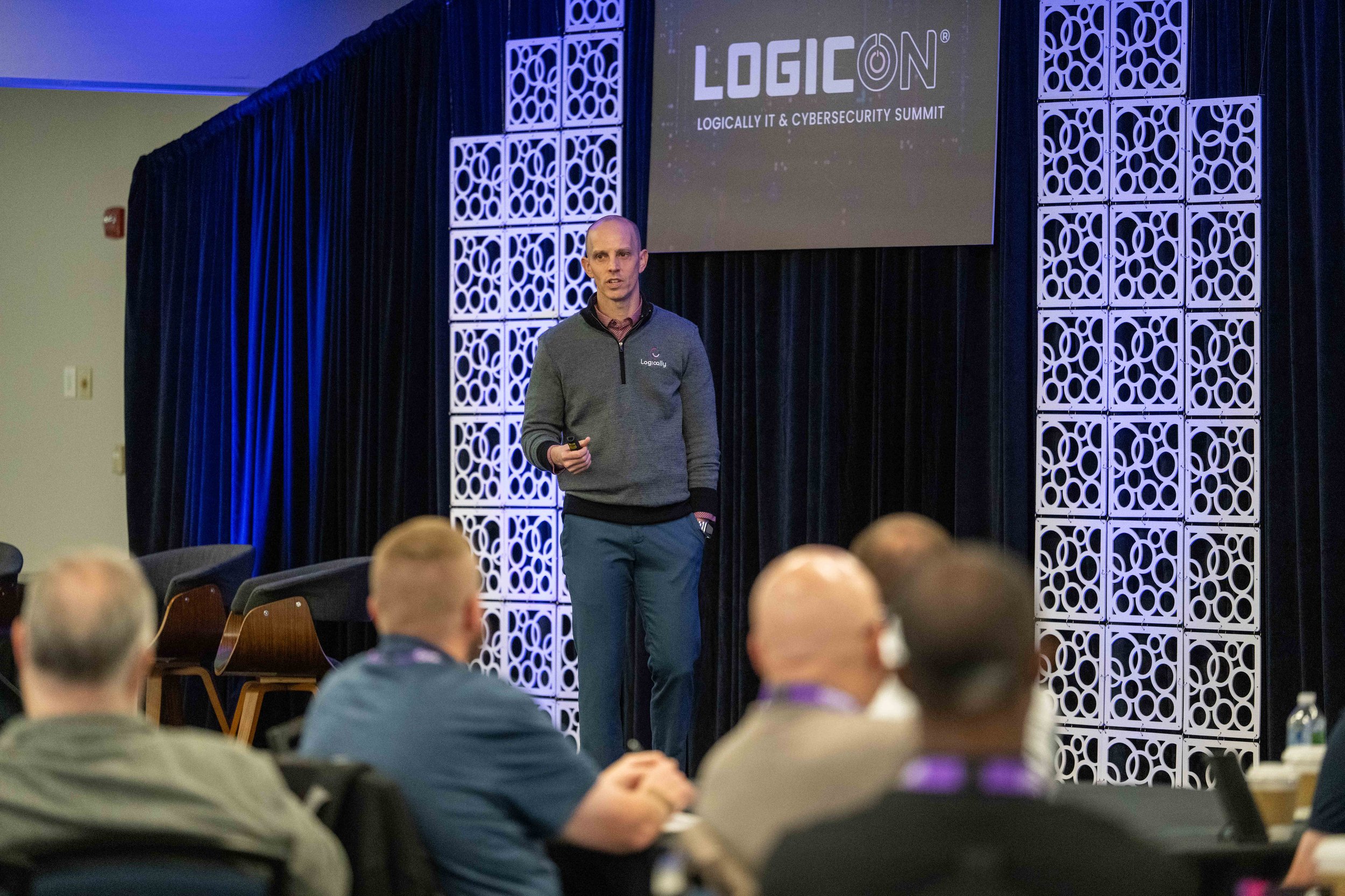
Joshua Skeens, CEO of Logically, argued that identity verification needs to be built into business processes, especially when a request involves urgency, confidentiality, or money. In “The State of IT & Cybersecurity: What Changed, What’s Coming, and What Matters Most,” he described a reported Hong Kong case in[MP1] which an employee joined a fabricated video meeting with what appeared to be familiar executives. The employee then made 15 transfers to five bank accounts, totaling about $25 million, according to Skeens’ account.
The detail that makes the case useful is that the employee had paused and questioned the original email. The manufactured meeting appeared to supply the context and agreement the employee needed to proceed. Skeens’s point was that a security program cannot rely only on people spotting suspicious wording or technology blocking every threat. Sensitive decisions also need controls that work when a request feels real.
“AI didn’t break through a firewall. It broke the decision protocol.” Joshua Skeens
Skeens recommended verifying requests through a known contact method, requiring a second independent approver for high-value transactions, and setting thresholds for unusual transfers. He also emphasized a cultural control: employees need to be able to question a request from someone senior without fear of getting in trouble.
A practical starting point is to review one payment or account-change process. Confirm that the callback number comes from an approved record, not the message itself, and identify who provides independent approval.
How can IT leaders show that a technology investment worked?
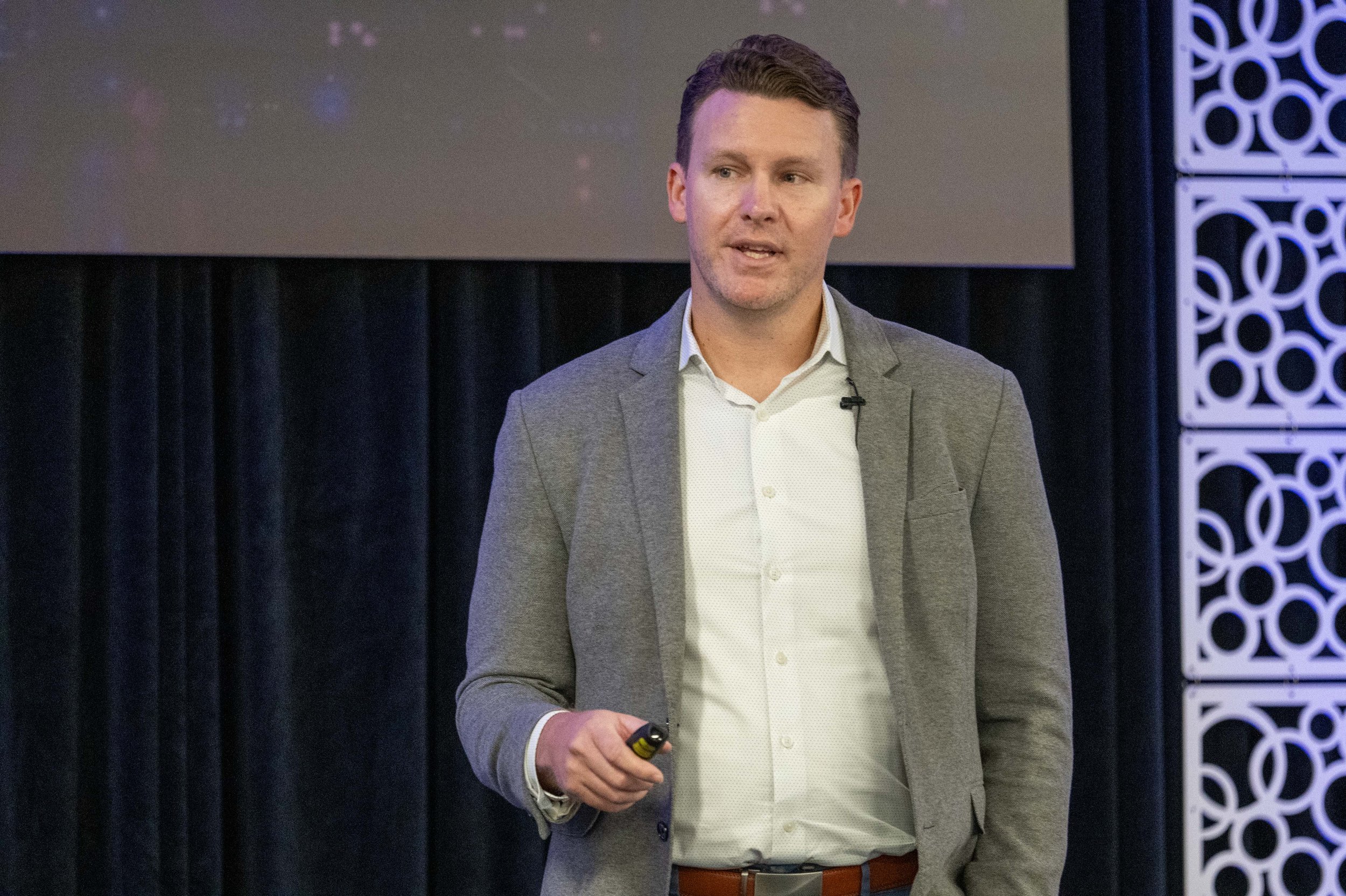
Beyond verifying trust, leaders also need to know whether technology delivers value. Jeremy Williams, Chief Operating Officer at Logically, made the case for beginning technology planning with the business result. In “The Business of IT: Turning Technology Investments into Business Results,” he explained that organizations do not ultimately invest in a platform for its own sake. They invest to help people work better, keep operations running, reduce friction, or support growth.
Williams described a translation gap between the measures IT teams often report, such as uptime, threats blocked, tickets closed, or projects delivered, and the outcomes executives need to understand. Those operational measures still matter. A second scorecard adds business impact: revenue, cost, customer experience, risk, or capacity. If a project is considered successful only because it went live, the organization may not know whether it solved the problem.
“Technology is the means, the business outcome. The business result is the reason we actually invest.” Jeremy Williams
His sequence is straightforward: define the business objective, identify the capability needed, then decide whether technology can help deliver it. Set a baseline and name the measure before implementation, then return to it after launch.
For the next investment under review, write down the problem, the business result it should change, and how the team will measure that change. This gives IT and business leaders a shared way to assess progress.
What should organizations include in an AI cost forecast?
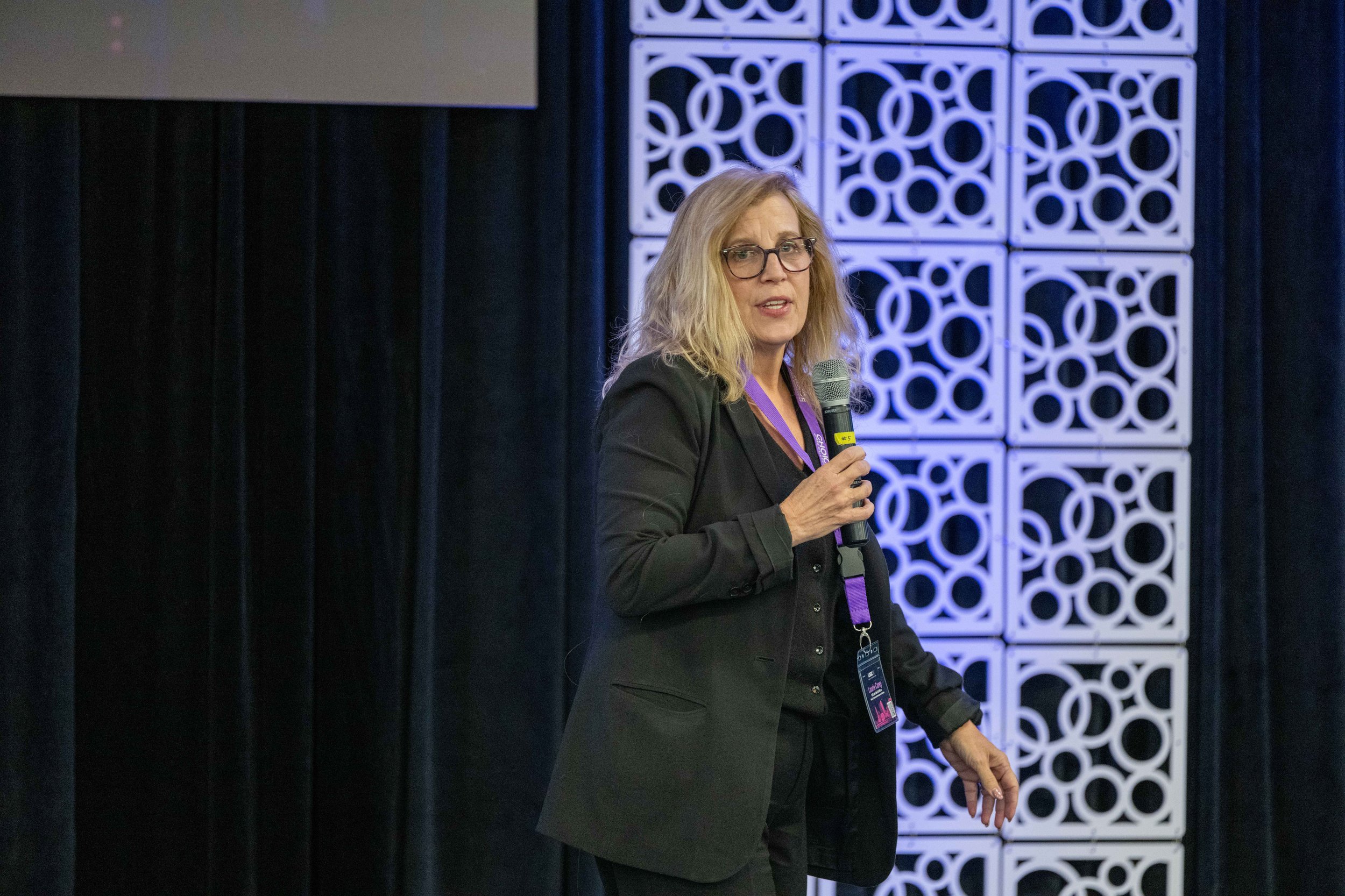
That focus on measurable value also applies to AI spending. Laurie Carey, CEO and Chief AI Officer at Nebula Academy, described AI as a changing operating cost once a pilot becomes part of everyday work. In “Beyond the AI Pilot: Budgeting, Forecasting & Measuring the True Cost of AI,” she urged leaders to look beyond license fees and consider usage and token costs, APIs, infrastructure, integration, governance, compliance, monitoring, and training.
Carey’s model tracks adoption, frequency, intensity, unit cost, and run rate. Those inputs help leaders understand why a budget can shift: more users, more tasks, or more resource-intensive usage can change the forecast. Her session also connected AI spend to capacity planning. The useful question is not just how much a tool costs, but what work it enables and how that compares with other ways to add capacity.
“You can’t just set it and forget it.” Laurie Carey
Carey recommended keeping Finance and the business owner in the conversation, monitoring use by use case, and reviewing which workflows are growing. For one pilot, track the number of users, how often they use it, what the use costs, and what capacity or result the team gains. Revisit those assumptions as adoption changes.
How can leaders reduce the work that drains team energy?
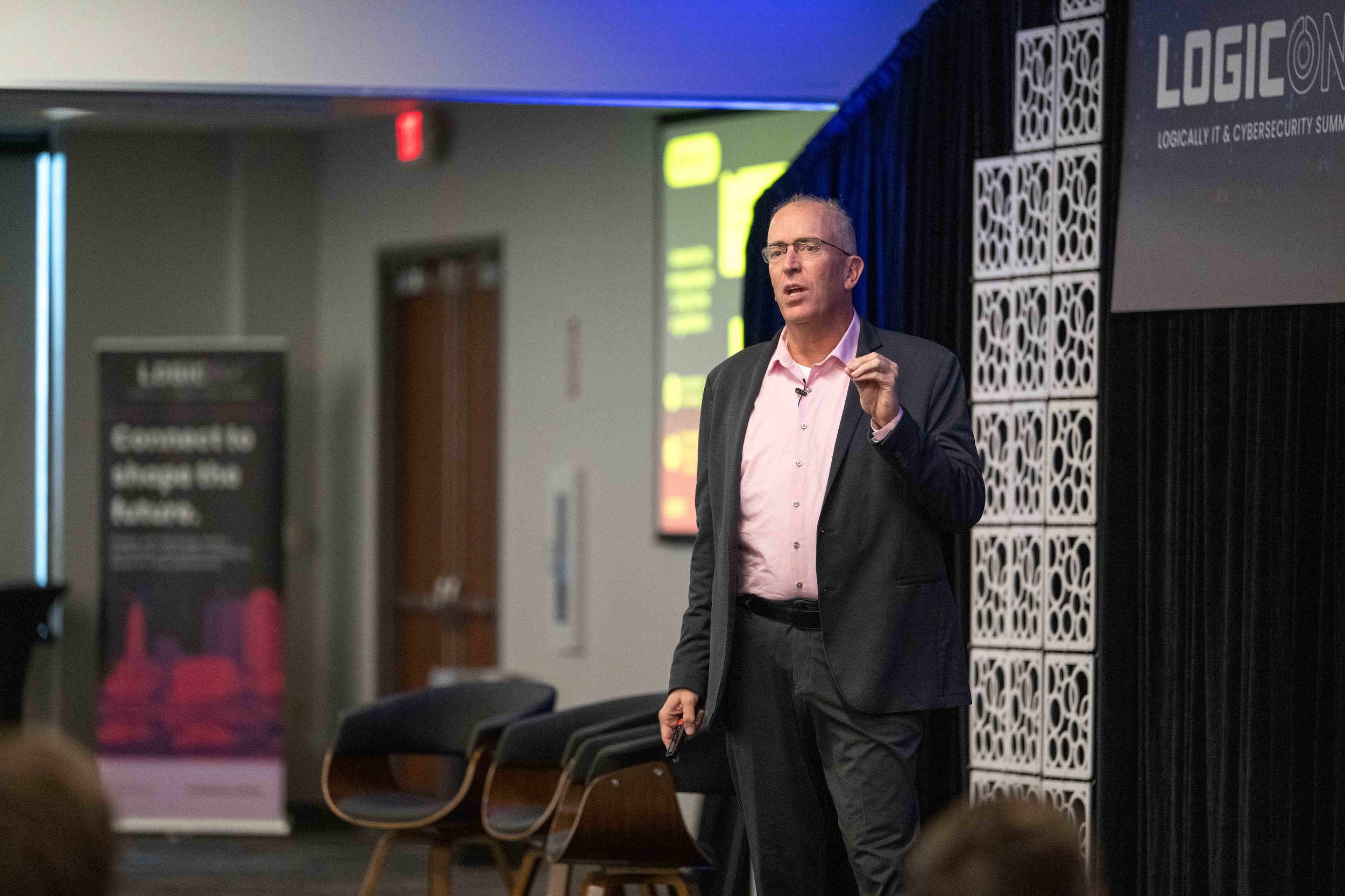
Beyond budgets and technology, the way teams work also shapes results. Andy Ellis, LogicON keynote speaker and author of “1% Leadership,” framed leadership as the way people’s energy is turned into value. In “Stop Destroying Value: Building Leadership 1% at a Time,” he argued that leadership is not limited to formal authority. Anyone who affects how work gets done can help a team create value or consume energy through friction.
Ellis pointed to sources of lost effort such as burnout, exclusion, demotivation, inability, ineffective work, and misalignment. These are not abstract culture issues: they can show up as repeated handoffs, unclear ownership, meetings with no defined outcome, or work that continues after its value has disappeared.
“The place you are weakest is where you’re harming the organization the most.” Andy Ellis
One of Ellis’s practical suggestions was to define success criteria before a meeting or initiative begins, then review whether the expected result occurred. For recurring meetings, he also challenged leaders to state what would make it reasonable to stop holding them. That turns time and attention into something teams can manage, rather than assume they have in unlimited supply.
Choose one recurring meeting or process. Write down the result it should produce and what would justify changing or ending it. Then ask the people doing the work whether the change improves focus or execution.
What can IT, security, and business leaders do next?
The four sessions translate into four manageable actions. Each one gives a team a way to test whether a decision is safer, more valuable, or easier to execute.
- Security and operations leaders: Test one sensitive approval process. Confirm how staff can independently verify the request and who can approve an exception.
- IT and finance leaders: Tie one planned investment to a business objective. Agree on a baseline, success measure, owner, and review date before implementation.
- AI owners: Track the users, frequency, intensity, and unit cost of one use case. Review spend and capacity gained with Finance as use expands.
- People leaders: Identify one recurring source of wasted effort. Define the result the work should achieve, make one change, and check whether the team can complete it more effectively.
About LogicON 2026
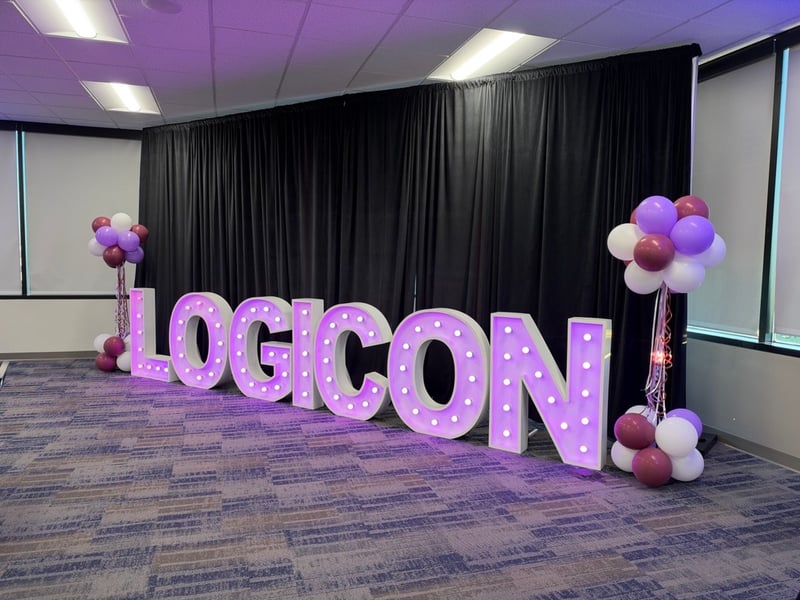
These practical lessons came from LogicON 2026, which was held in Columbus, Ohio, October 6–7, and designed for SMB leaders responsible for managing and securing their organizations’ technology. The event examined how connected technology is changing risk and business performance, with a practical focus on closing gaps between IT, cybersecurity, and automation through shared visibility, accountable decisions, and work tied to business outcomes.The challenge was easy to recognize in one example from the main stage: a request can sound like a leader, look like a colleague, and still be an attack. Across four selected sessions, Logically speakers and invited experts connected that problem to broader questions of investment, AI operating costs, and the way leaders enable teams to work well.
What was LogicON 2026 designed to help leaders do?
Beyond the four sessions highlighted above, LogicON 2026 was a curated event for people responsible for managing and securing their organizations’ technology. Its theme, “The Era of Convergence: Closing the Gaps Between IT and Cybersecurity,” reflected a practical reality: cloud, identity, endpoints, data, and automation increasingly affect one another, while teams may still manage them through separate tools and processes.
The event paired main-stage sessions with hands-on exploration and opportunities to connect with peers and experts. Its goal was to give practitioners and decision-makers useful next steps for improving visibility, reducing complexity, applying AI responsibly, and strengthening resilience.
Cliff Varnadoe, Director for U.S. Federal and Solutions Engineering at SonicWall, described LogicON’s audience as engaged with the substance of the sessions. His observation adds a partner’s view of the event as a place where practitioners bring questions to the conversation, not simply watch from the room.
|
Quote from Cliff Varnadoe’s LogicON partner interview.
What did four LogicON sessions reveal about closing those gaps?
The sessions approached different problems, but returned to three operating questions: Can people verify a high-impact request? Can leaders connect technology to a business result? Can teams manage change without losing control of cost, capacity, or people’s time?
Joshua Skeens showed how trust can be manipulated through familiar voices and faces. Jeremy Williams connected technology investments to measurable business outcomes. Laurie Carey examined how AI costs change as usage grows. Andy Ellis asked leaders to consider how their behavior and systems affect the energy people bring to work. Together, they made convergence tangible: the issue is not only which tools an organization has, but how decisions, accountability, and work fit together.
What is one idea to carry forward from LogicON 2026?
The four sessions show that closing gaps is a matter of operating discipline. Verify high-impact requests, connect investments to results, forecast changing AI costs, and remove work friction that prevents people from contributing. Choose one next decision, give it an owner, and set a date to review the outcome.
Where can readers find the LogicON 2026 sessions and follow-up?
For mid-market organizations looking to apply these lessons, the aim is not to solve every gap at once. It is to identify the next gap that matters to the business, assign clear ownership, and make progress visible. Logically’s cyber-first approach brings IT operations and cybersecurity together with shared visibility, expert support, and accountability across the environment.
Thank you to our LogicON 2026 Sponsors
FAQs
What was the main theme of LogicON 2026?
Its theme, “The Era of Convergence: Closing the Gaps Between IT and Cybersecurity,” reflected a practical reality: cloud, identity, endpoints, data, and automation increasingly affect one another, while teams may still manage them through separate tools and processes.
How can organizations protect against AI-enabled impersonation and financial fraud?
Skeens recommended verifying requests through a known contact method, requiring a second independent approver for high-value transactions, and setting thresholds for unusual transfers. He also emphasized a cultural control: employees need to be able to question a request from someone senior without fear of getting in trouble.
How should IT leaders measure the business value of technology investments?
His sequence is straightforward: define the business objective, identify the capability needed, then decide whether technology can help deliver it. Set a baseline and name the measure before implementation, then return to it after launch.
What costs should businesses include when forecasting AI investments?
In “Beyond the AI Pilot: Budgeting, Forecasting & Measuring the True Cost of AI,” she urged leaders to look beyond license fees and consider usage and token costs, APIs, infrastructure, integration, governance, compliance, monitoring, and training.
How can business leaders reduce wasted effort and improve team productivity?
One of Ellis’s practical suggestions was to define success criteria before a meeting or initiative begins, then review whether the expected result occurred. For recurring meetings, he also challenged leaders to state what would make it reasonable to stop holding them.
What actions can IT and security leaders take after LogicON 2026?
Verify high-impact requests, connect investments to results, forecast changing AI costs, and remove work friction that prevents people from contributing. Choose one next decision, give it an owner, and set a date to review the outcome.